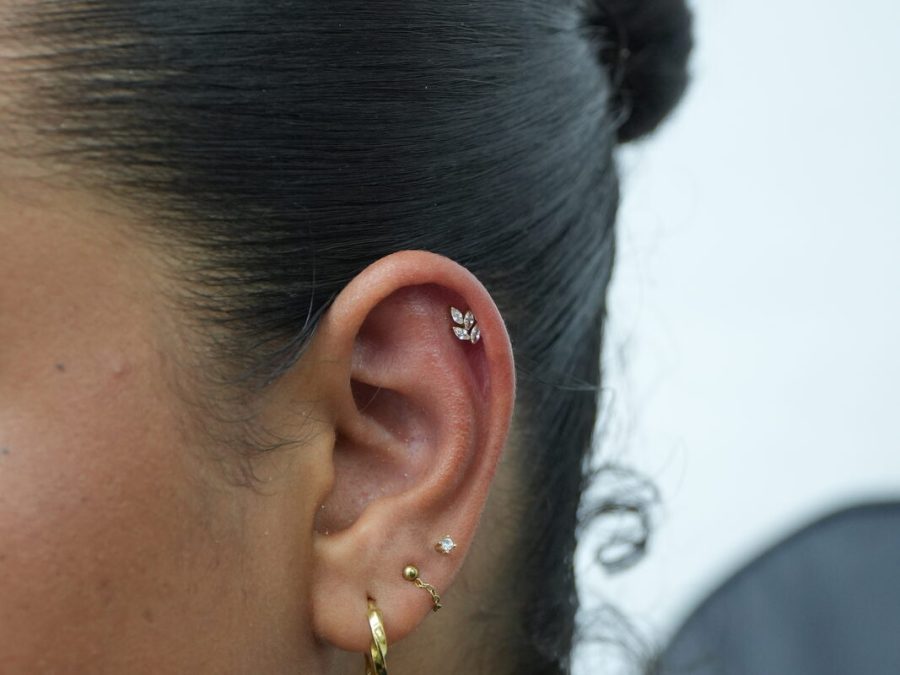

The metal sitting in a fresh piercing matters more than the shape of it. Healing is your body deciding whether to accept something foreign, and some metals make that decision much easier.
At our piercing studio in Uluwatu the jewelry is included in every price, so this is a choice about what suits you rather than what it adds to the bill.
Titanium: the default for anything fresh
Implant-grade titanium is light, strong and nickel-free. Nickel is the metal most people react to without knowing it, and it is the usual culprit behind a piercing that stays angry for months.
It is also inert, so it does not corrode in sweat or sea air — which in Bali is not a small detail.
And it takes an anodised finish, which is how you get gold, rose, black or rainbow tones without changing the metal touching your skin.

Gold: beautiful, but be specific
Solid 14k or 18k gold is a genuinely good healing metal, and it is what most people picture when they imagine a finished ear.
The catch is everything sold as “gold” that is not solid. Plated and filled jewelry wears through, and what is underneath is usually the thing you were trying to avoid.
Yellow gold above 18k is soft enough to scratch and bend in a piercing you sleep on, which makes 14k the sweet spot for daily wear.
What to avoid in a healing piercing
- Anything plated, filled, or vaguely described as “surgical steel” without a grade.
- Sterling silver — it tarnishes inside a wound and can leave a permanent grey mark in the skin.
- Acrylic and plastic, which scratch easily and hold bacteria in the scratches.
- Cheap hoops in a brand-new piercing: rings move constantly and slow healing right down.
Threading matters as much as metal
Internally threaded or threadless jewelry has no screw thread on the part that passes through your piercing.
Externally threaded pieces drag that thread through the healing channel every time they go in or out. It is a small design detail with a big effect on comfort.

Start with a bar, finish with a hoop
Almost every piercing heals better on a straight or curved bar. It moves less, catches less, and gives swelling somewhere to go.
The hoop you actually want is the reward at the end. Lobes are usually ready at six to eight weeks; cartilage placements like helix, conch or industrial often want six to twelve months.
Sizing is not a detail
Bar length is chosen for your anatomy plus room for swelling. Too short and it presses in; too long and it snags on everything.
We usually downsize a bar once the initial swelling has gone. It is a two-minute job and it makes the rest of the healing far easier.
Humidity, salt water and hoops
Bali adds one wrinkle: sweat and sea air get into everything. Titanium shrugs both off, which is another reason it is what we reach for first.
If you are in the water most days, keep the jewelry simple until healing is done. Charms and stones are for later.

So which should you pick?
Heal in implant-grade titanium. Once it is settled, wear whatever you like, as long as it is solid rather than plated.
That is the whole rule, and it covers ninety percent of the problems we see walk back through the door.
Common questions about piercing jewelry
Is the jewelry included in the price?
Yes. Every piercing price at our studio includes the jewelry from the case at the front desk — hoops, clickers, barbells, ends and charms.
Can I bring my own jewelry?
For a fresh piercing, no. Once healed, bring it in and we will check the material and sizing before it goes anywhere near the hole.
Will titanium set off airport scanners?
No. The pieces are far too small, and titanium is not magnetic in the way scanners look for.
What size should I ask for?
Let us measure. Bar length depends on your anatomy and expected swelling, and a bar that is too short is the most common cause of trouble.
Caring for the metal
Once healed, take the jewelry out occasionally and wash it with mild soap. Body oil builds up behind stones and ends.
Come and look at the case
You pick your piece before we mark the placement. See the piercing page for placements and prices, or ask on WhatsApp what is in the case this week.